
The real question every seller asks: is staging worth the money?
It is the most common objection agents hear. Sellers look at the cost of professional staging and wonder whether they will actually see that investment come back at closing. It is a fair question, and one that deserves a data-driven answer rather than a vague promise that "staged homes sell for more."
The ROI of staging is not theoretical. It shows up in two measurable ways: higher sale price and lower carrying costs from faster sales.
The numbers: what the data actually shows
Sale price premium
Multiple studies have established that staged homes sell for more than unstaged ones. The National Association of Realtors reports that 75% of sellers who invested in staging saw a return of 5-15% over the asking price. The Real Estate Staging Association puts the average sale price premium for staged homes at 6-13% above the unstaged equivalent.
Let us put that in dollar terms. On a $700,000 home in Denver, a 6% staging premium represents $42,000 in additional sale proceeds. Even at the conservative end of the range, a 3% premium means $21,000. Compare that to a typical staging investment of $3,000-$8,000, and the math becomes very compelling.
Days on market reduction
The second component of staging ROI is the time value. As we explored in our analysis of days on market by price range, staged homes sell significantly faster than unstaged ones. That time savings has a direct financial value.
Consider the monthly carrying costs on a $900,000 home in San Diego: mortgage payment ($5,200), property taxes ($940), insurance ($200), utilities ($250), and HOA fees ($200). That is roughly $6,800 per month. If staging reduces DOM by 30 days, the seller saves approximately $6,800 in carrying costs alone, before accounting for any sale price premium.
Price reduction avoidance
There is a third financial benefit that is often overlooked: price reduction avoidance. Homes that sit on the market eventually require price reductions to attract buyer interest. The average price reduction in most markets is 3-5% of the original list price. On a $750,000 home, that is $22,500-$37,500 evaporated.
Staging helps avoid price reductions by generating stronger initial interest and converting showings to offers more quickly. The investment in staging is a fraction of what a single price reduction costs.
Building the full ROI picture: a worked example
Let us walk through a realistic scenario for a home in Boulder, Colorado to see how staging ROI compounds.
The property
A three-bedroom, two-bathroom home listed at $825,000. The home is in good condition but vacant after the sellers relocated. Without staging, comparable vacant listings in the neighborhood have been sitting for 50-65 days and ultimately selling at 2-4% below list price.
The staging investment
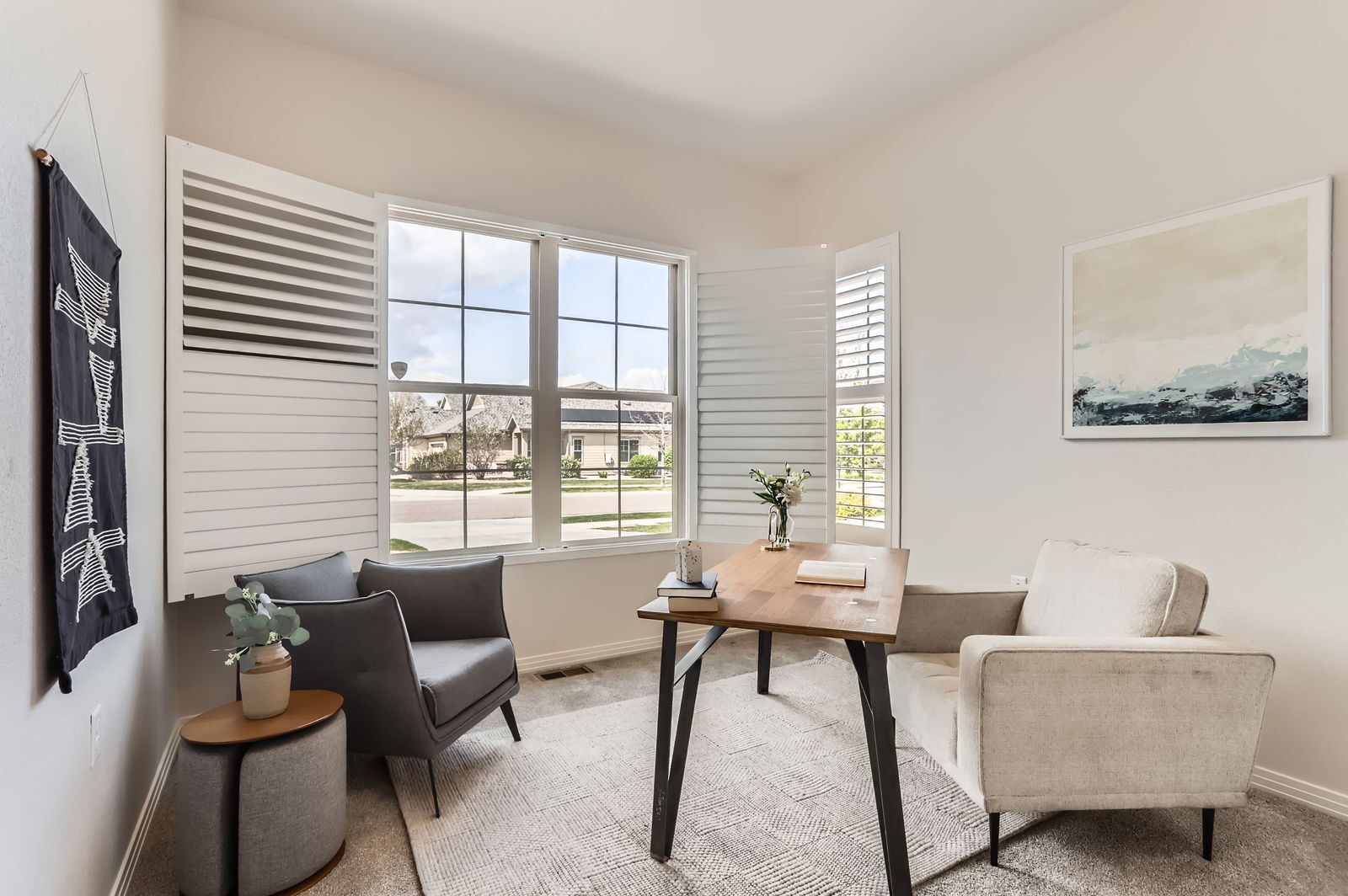
Full-service staging of the living room, dining room, primary bedroom, and home office: $5,500 for the first month, including delivery, installation, and rental. The 500 Manhattan case study in Boulder provides a real-world example of this type of engagement.
The outcome with staging
- Days on market: 18 days (vs. 55-day neighborhood average for unstaged)
- Sale price: $849,000, which is 2.9% above list price
- Carrying cost savings: 37 fewer days on market saves approximately $8,400 in carrying costs
- Price premium: $24,000 above list price (compared to the likely 2-3% below list without staging)
Total financial impact
- Staging cost: $5,500
- Carrying cost savings: $8,400
- Price premium vs. expected unstaged outcome: $24,000 + avoided $16,500 price reduction = $40,500
- Net benefit to seller: approximately $43,400
- ROI: approximately 7.9x the staging investment
A $5,500 staging investment that yields $43,000 in net benefit is not an expense. It is the highest-returning investment a seller can make before closing.
Why staging ROI is so high: the economic mechanics
The outsized ROI of staging is not a marketing gimmick. It reflects basic real estate economics.
- Staging costs are fixed and small relative to home value. Even a $10,000 staging package on a $1M home represents just 1% of the property value. The potential upside is 5-15% of that value.
- Buyer decisions are emotional. Research consistently shows that buyers make offers based on how a home makes them feel. Staging directly influences that emotional response, which translates to higher offers.
- Carrying costs compound daily. Every day a home sits unsold costs the seller money. Staging front-loads the investment to minimize the duration of those ongoing costs.
Staging ROI by service type
Not all staging services are created equal, and the ROI varies depending on the approach.
Expert design advice
Expert design advice from Guest House is the most affordable entry point. For sellers who already have furnishings in the home, a professional design consultation can guide them on what to keep, remove, rearrange, and accessorize. The ROI on design advice is extremely high because the cost is low and the visual impact can be substantial.
In-person styling
In-person styling takes design advice further by having a professional physically rearrange and style the home using the seller's own belongings, supplemented with accessories and art. This service is ideal for occupied homes and delivers strong ROI in the sub-$700K range where full staging may not be budget-appropriate.
Full-service staging
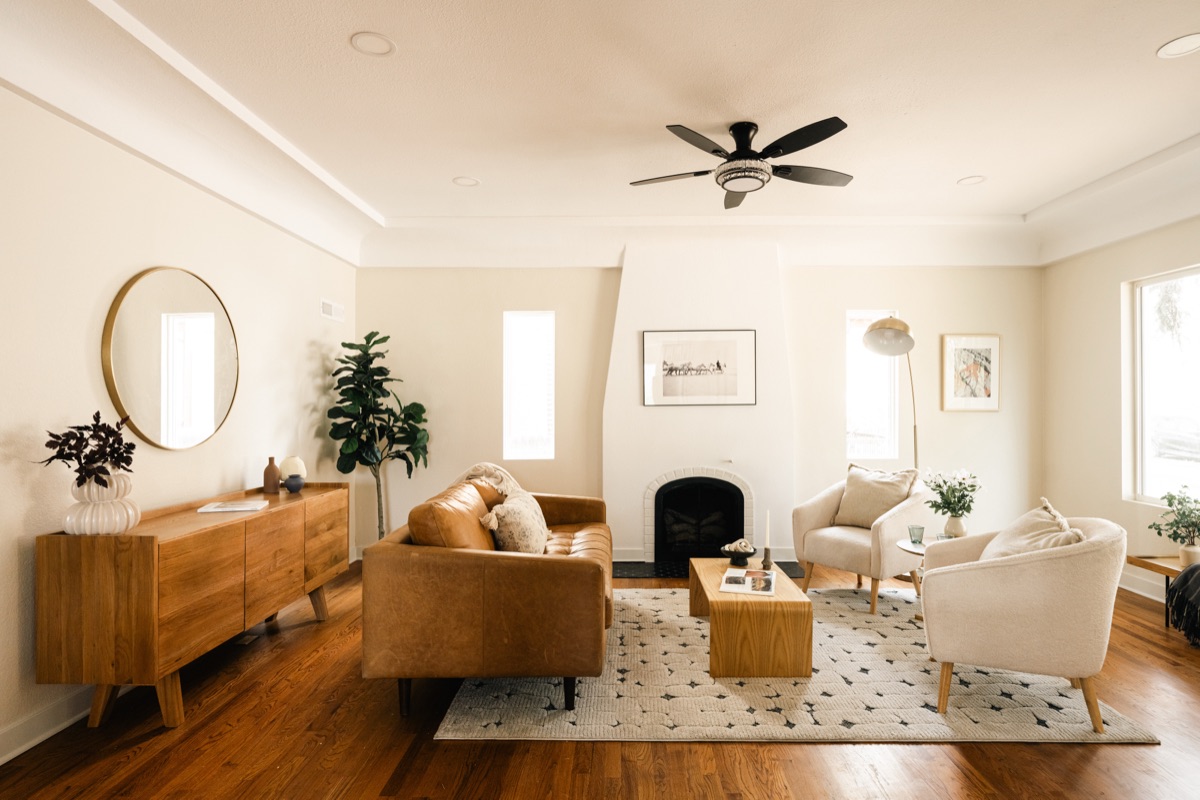
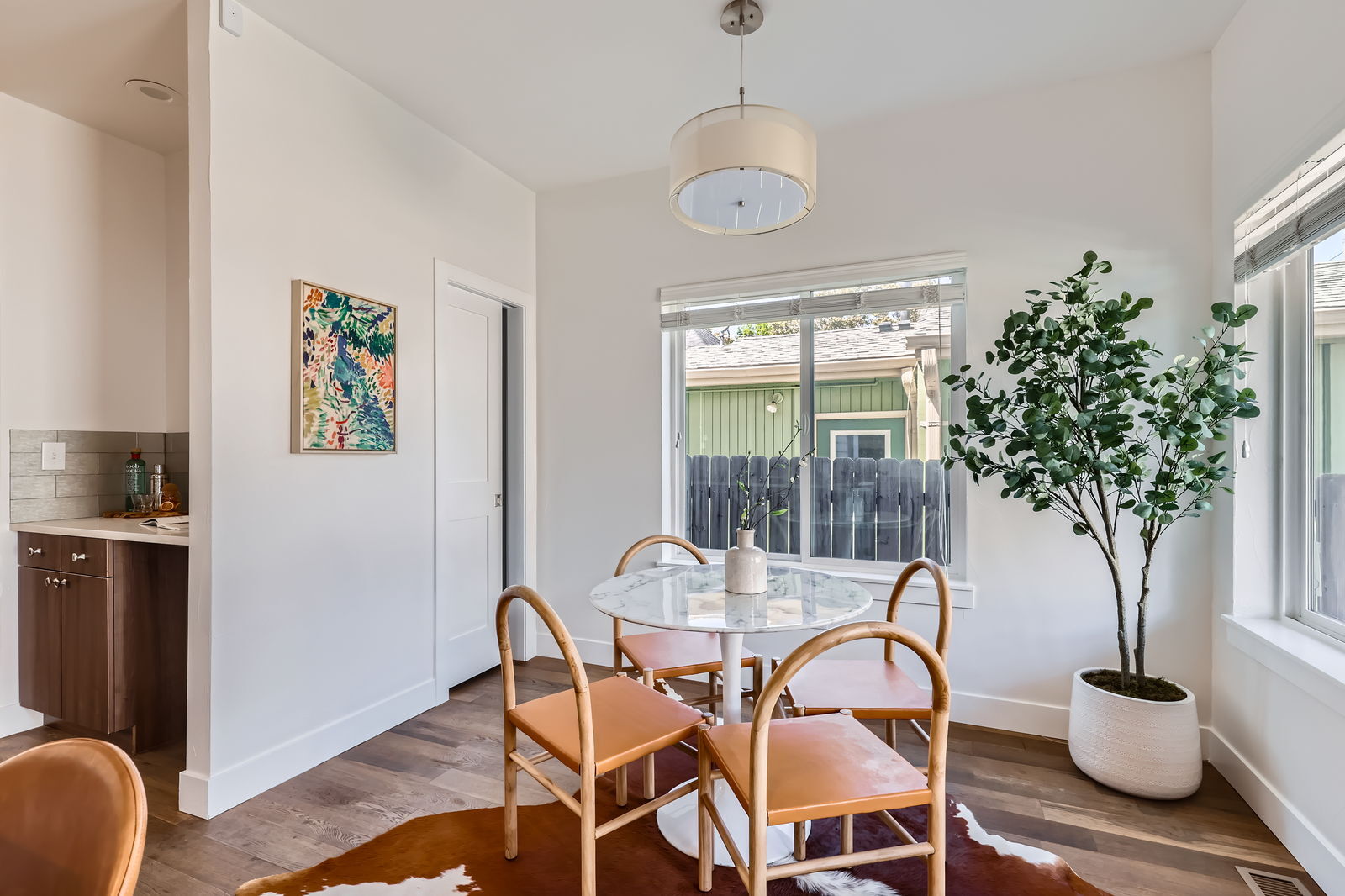
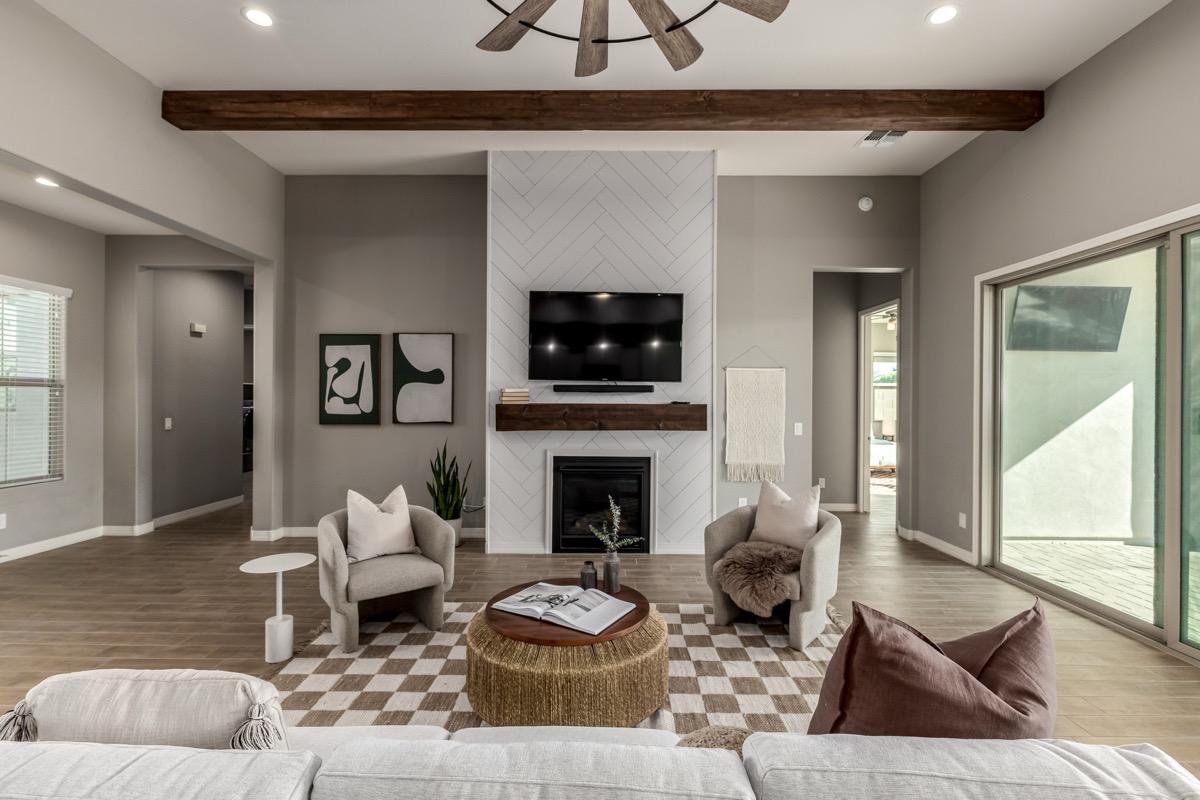
Full-service staging involves bringing in professionally selected furniture, art, and accessories to transform vacant or poorly furnished homes. This is the highest-cost option but also delivers the highest absolute ROI, particularly for vacant homes in the $500K+ range. The 3640 Lipan case study demonstrates how full staging transformed a vacant Denver property.
Common objections and the ROI responses
"Staging is too expensive"
Compared to what? The average staging investment is 1-2% of the home's value. The average price reduction on an unstaged home that sits too long is 3-5%. Not staging is the more expensive choice. For more on addressing this objection, see our article on overcoming seller objections to staging.
"My home will sell itself"
Perhaps, but at what price and after how long? The data is clear: even desirable homes in strong markets sell for more and faster when staged. "Selling" is not the goal. "Selling well" is.
"Buyers can see past the emptiness"
Most cannot. Only 10% of buyers can visualize a space's potential when viewing an empty room, according to NAR survey data. The other 90% need help, and staging provides it.
How to calculate staging ROI for your listing
Here is a simple framework agents can use during listing presentations to demonstrate staging ROI to sellers.
- Estimate carrying costs: Add up the monthly mortgage, taxes, insurance, utilities, and HOA. Divide by 30 to get a daily rate.
- Estimate DOM reduction: Based on local comps, estimate how many fewer days the home will sit if staged. Use 15-30 days as a conservative range.
- Calculate carrying cost savings: Daily rate multiplied by estimated DOM reduction.
- Estimate sale price premium: Use 3-6% as a conservative range for the price advantage of staging.
- Subtract staging cost: Get a quote for the specific property. Guest House's Smart Quote tool provides instant estimates based on the property details.
- Present the net benefit: Carrying cost savings + price premium - staging cost = net ROI.
The bottom line
The ROI of staging is not a matter of opinion. It is a matter of data. Across every price range and every Guest House market, professional staging delivers a measurable financial return that typically exceeds the investment by five to ten times. For agents, staging is not just a service to recommend. It is a tool for winning listings, delighting sellers, and building a reputation for excellence. For sellers, it is the single highest-ROI investment they can make before their home hits the market.
Ready to see the numbers for your specific property? Get your free staging quote and build the ROI case for your next listing.