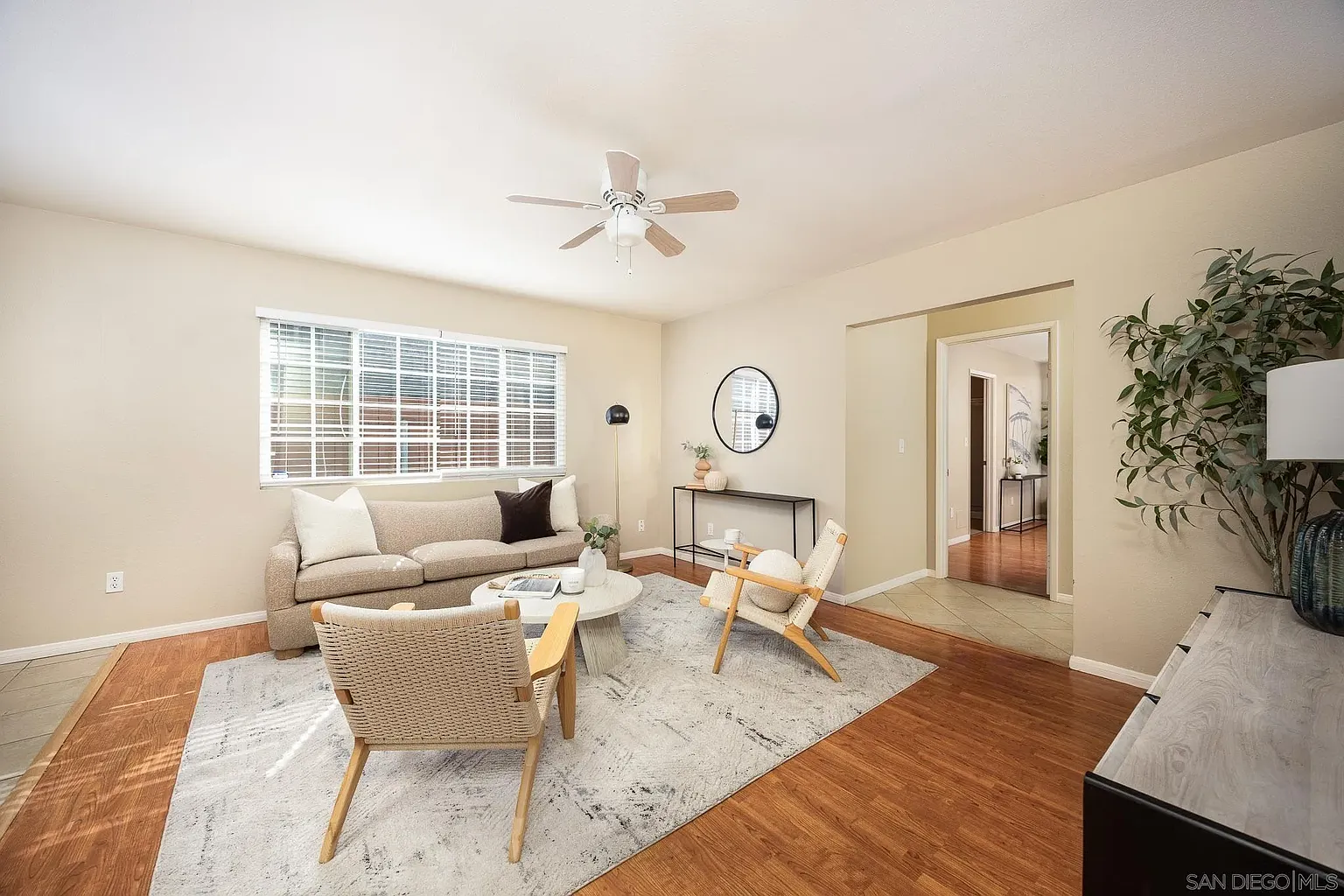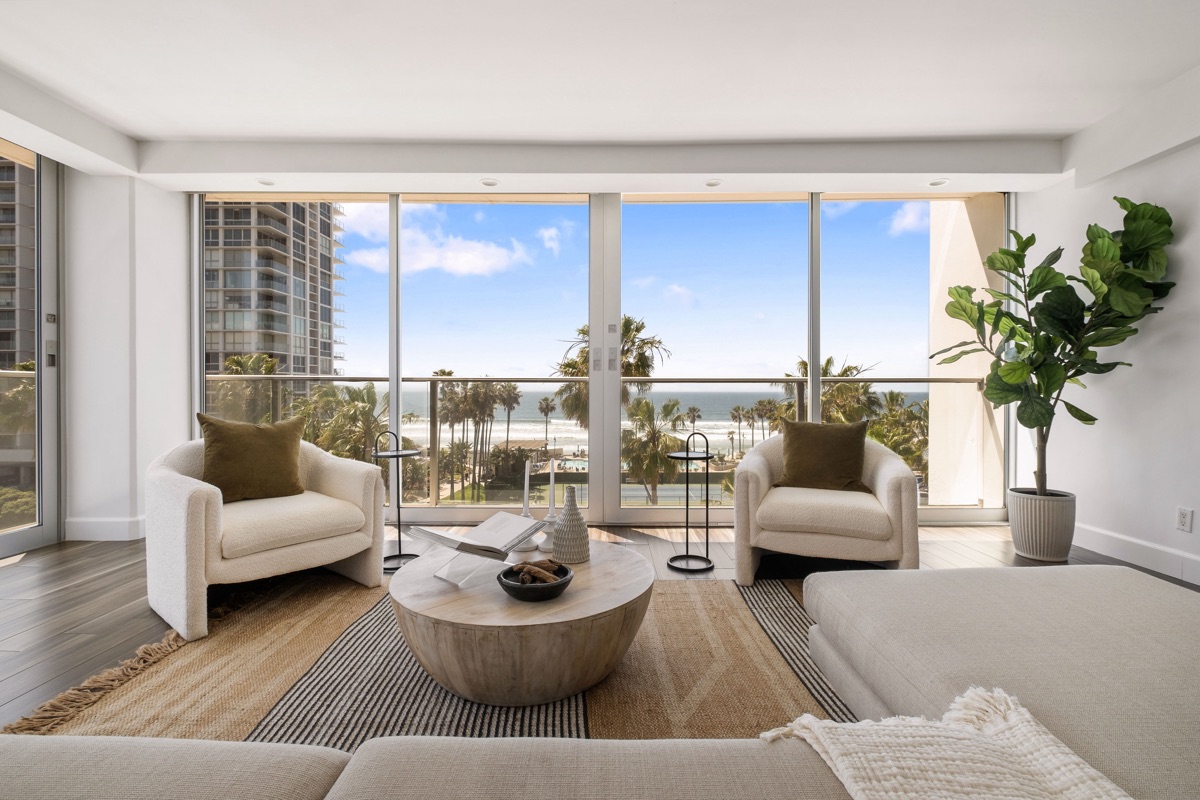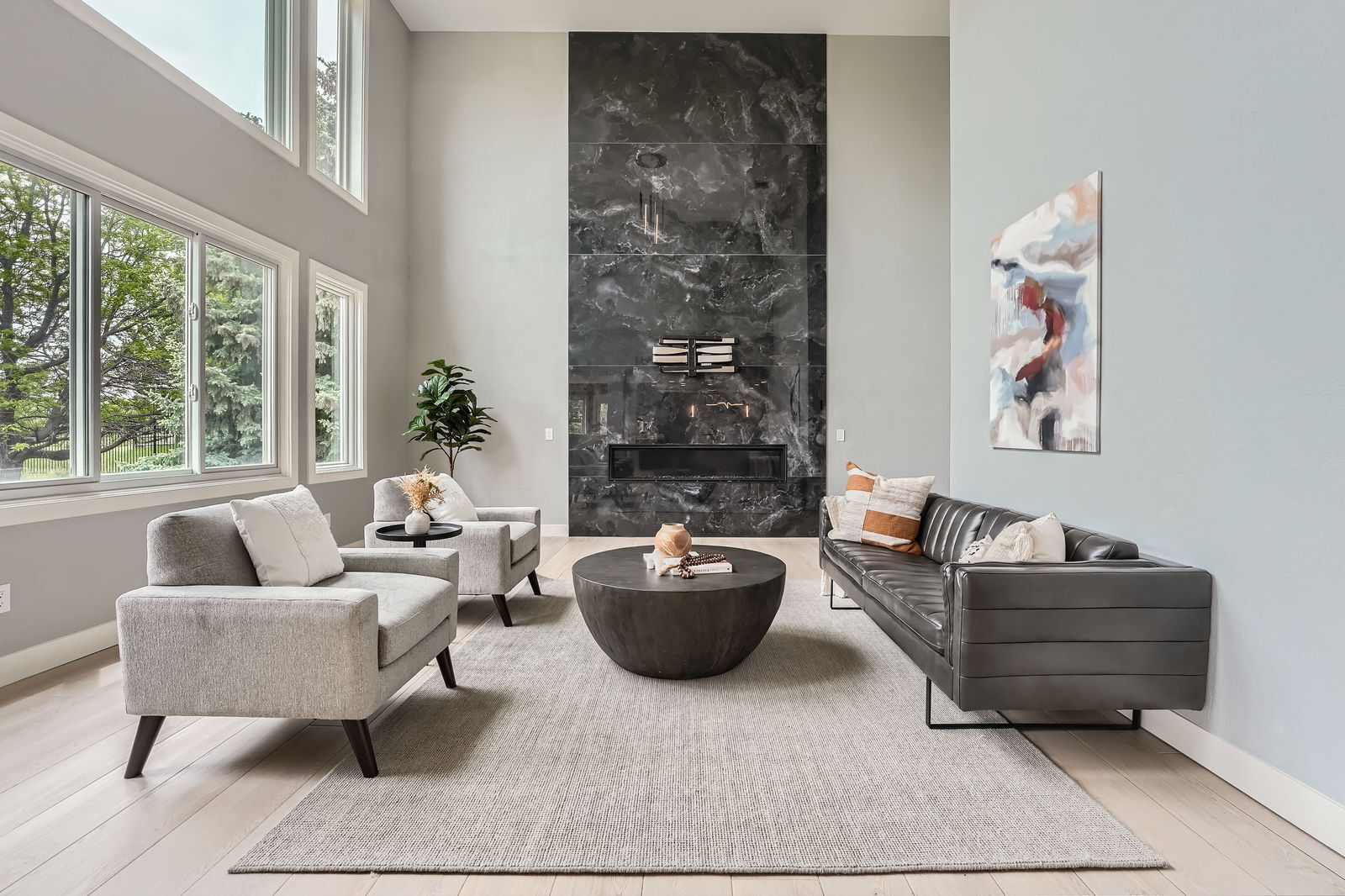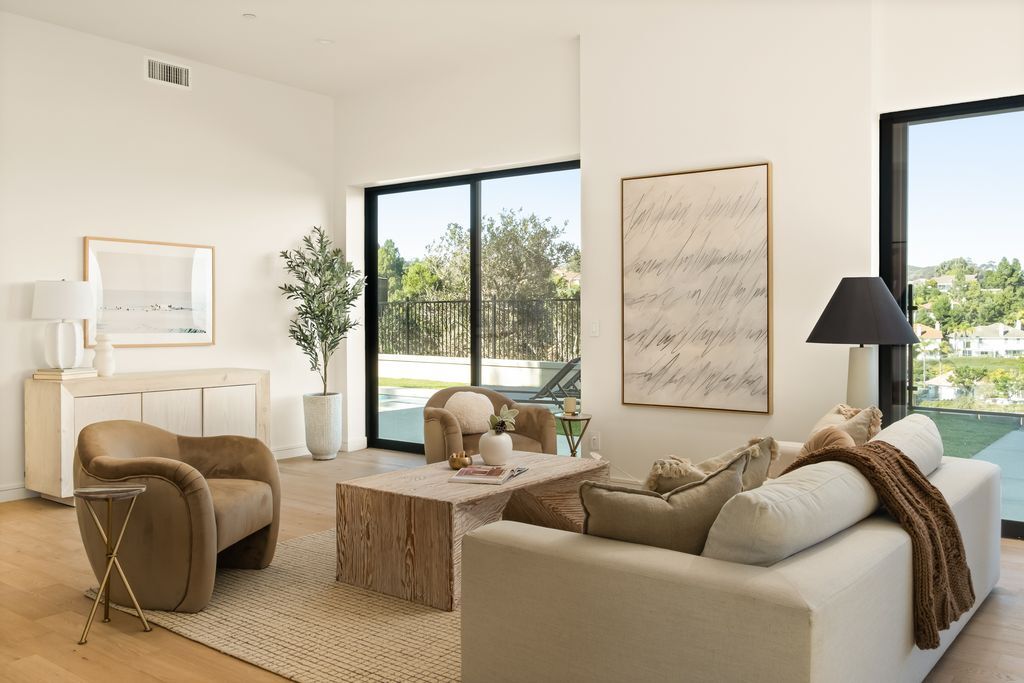

When staging budgets are limited — and they almost always are — the smartest move isn't to spread your resources thin across every room. It's to concentrate your investment where it matters most: the rooms that buyers weigh most heavily when forming their opinion of a home. And make no mistake, that opinion forms fast. Research from the National Association of Realtors suggests that buyers form a lasting impression within the first 7–10 seconds of entering a property.
1. The living room: your opening statement
The living room is almost always the first interior space buyers experience after walking through the front door. It sets the emotional tone for the entire showing. A well-staged living room communicates warmth, comfort, and possibility. A poorly staged one — or worse, an empty one — creates a sense of unease that's difficult to overcome, no matter how impressive the kitchen or primary suite might be.
How to stage it
- Anchor with a sofa: Choose a clean-lined sofa in a neutral fabric (warm gray, oatmeal, soft white). Position it to face the room's focal point — typically a fireplace, large window, or entertainment wall.
- Create a conversation area: Add two accent chairs angled toward the sofa with a coffee table in between. This creates an inviting grouping that helps buyers imagine entertaining.
- Layer textures: Throw pillows, a woven blanket, and a textured area rug add warmth without clutter. Stick to a cohesive palette of 3–4 colors.
- Add life: A large potted plant (fiddle leaf fig, snake plant, or bird of paradise) brings organic energy to the space. Fresh flowers on the coffee table are a small touch with outsized impact.
- Control the light: Open all blinds and curtains. If natural light is limited, add floor lamps with warm-toned bulbs (2700K–3000K) in dark corners.
In our 836 Carlsbad staging project, the living room was the first room we addressed. By creating a coastal-modern conversation area anchored by a linen sofa and driftwood coffee table, we transformed a cold, vacant room into the warm centerpiece that ultimately drove multiple offers.
"The living room is your opening argument. If you lose the buyer here, the rest of the tour is an uphill battle."
2. The kitchen: where decisions are made
Real estate agents have been saying "kitchens sell houses" for decades, and the data backs them up. According to the National Association of Home Builders, the kitchen is the #1 room that influences purchase decisions. Buyers linger here longer than any other room, mentally evaluating workflow, storage, counter space, and overall condition.
How to stage it
- Clear the counters: Remove everything except 2–3 intentional items. A wooden cutting board with a bowl of lemons, a sleek coffee maker, or a small herb garden. The goal is to showcase counter space while suggesting lifestyle.
- Unify hardware: If cabinet hardware is dated, replacing it is one of the highest-ROI updates in real estate. Brushed brass or matte black pulls cost $3–$5 each and transform the look of an entire kitchen.
- Stage the breakfast area: If there's an eat-in nook or island with stools, set it casually — a folded cloth napkin, a small vase of flowers, a cookbook open to an appetizing page.
- Add under-cabinet lighting: Peel-and-stick LED strips under upper cabinets cost under $25 and create a warm glow that makes the kitchen feel modern and inviting, especially for evening showings.
- Deep clean everything: Grout, appliances, the inside of the oven and microwave. Buyers open cabinets and drawers. They check under the sink. Everything should be spotless.
3. The primary bedroom: the personal retreat
The primary bedroom is where buyers project their most personal aspirations. They want to feel calm, luxurious, and pampered. A well-staged primary bedroom whispers "spa" and "sanctuary" — not "storage" and "screen time."
How to stage it
- Invest in bedding: This is not the place to cut corners. White or ivory hotel-quality bedding with layered textures (a chunky knit throw, European shams, lumbar pillow) creates an instant sense of luxury.
- Matched nightstands: Symmetry signals order and calm. Two matching nightstands with identical table lamps create visual balance that the brain finds deeply satisfying.
- Remove personal items: Family photos, medication, personal devices — all of it should be packed away. Buyers need to imagine themselves in this space, not the current owners.
- Add a seating moment: If space allows, a small upholstered bench at the foot of the bed or an accent chair by the window elevates the room from "bedroom" to "suite."
- Scent matters: A subtle reed diffuser with a clean, spa-like scent (eucalyptus, lavender, or white tea) adds an invisible but powerful layer to the buyer experience.
In our 500 Manhattan Drive project in Boulder, the primary bedroom staging was specifically designed to echo the mountain-modern aesthetic of the home's architecture — warm wood tones, soft organic textiles, and muted earth colors. Feedback from buyer's agents consistently cited the primary suite as the room that sealed the deal.
4. The primary bathroom: small space, big impact
Buyers judge bathrooms more critically than almost any other space. A bathroom that feels dated, cramped, or unclean can override positive impressions from every other room. Conversely, a bathroom that feels fresh and spa-like can elevate a buyer's perception of the entire home.
How to stage it
- White towels, rolled: Remove all personal towels and replace with fluffy white towels. Roll two or three and place them on the counter or in a basket. This is the universal visual shorthand for "clean and fresh."
- Clear the shower: Remove all shampoo bottles, razors, and personal items. Replace with one or two high-end-looking products (or simply leave it empty and spotless).
- Update the mirror: If the bathroom mirror is a builder-grade plate mirror, consider replacing it with a framed version. This single swap can make a bathroom feel custom-designed.
- Add greenery: A small potted plant (pothos, air plant, or a small fern) brings life to a bathroom without taking up counter space.
- Fix the grout: Stained, cracked, or missing grout is the #1 bathroom issue that turns off buyers. A $15 tube of grout paint can solve this in an afternoon.
For more detailed guidance on preparing bathrooms and every other room for market, our expert design advice consultations walk you through specific, actionable recommendations tailored to your property and local market.
"You don't need a full bathroom renovation to impress buyers. Fresh grout, white towels, and a sparkling clean vanity can do 80% of the work."
5. The outdoor living space: the bonus room that buyers love
How to stage it
- Define zones: Create a dining area (table and chairs) and a lounging area (outdoor sofa or Adirondack chairs). This shows buyers the space can accommodate multiple uses.
- Add an outdoor rug: An all-weather rug anchors the seating area and makes a patio feel like a true outdoor room.
- String lights or lanterns: For evening showings, warm string lights overhead create an irresistible atmosphere. Even during the day, they suggest the possibility of magical evenings outdoors.
- Potted plants: Large planters flanking the back door or grouped in corners add color and softness to hardscape-heavy outdoor areas.
- Stage the grill area: If there's a built-in grill or outdoor kitchen, keep it spotless. A small cutting board, a set of grilling tools, and a couple of craft beers (or sparkling waters) in a bucket of ice during open houses tells a story that buyers want to step into.
For a look at how we transform outdoor spaces as part of a comprehensive staging plan, explore our 3640 Lipan case study, where the backyard patio staging was a key factor in the home's quick sale.
Where to invest when you can't stage everything
If budget constraints mean you can only stage a few rooms, here's the priority order based on buyer impact data:
- Living room — First impression, highest emotional impact
- Kitchen — Most scrutinized room, longest dwell time
- Primary bedroom — Personal connection, "can I live here?" moment
- Primary bathroom — Condition-sensitive, easy to improve cheaply
- Outdoor living — Lifestyle differentiator, especially in Sun Belt markets
Even if you only fully stage the living room and kitchen, those two rooms alone can shift buyer perception of the entire home. Pair that with basic prep in the remaining rooms (decluttering, deep cleaning, fresh paint), and you've created a listing that competes well above its weight class.
Getting started: your staging game plan
The most effective approach to staging these five rooms varies by property type, price point, and target buyer demographic. A $450K townhome in Denver requires a different strategy than a $1.5M estate in Rancho Santa Fe.
That's where professional guidance makes all the difference. Whether you opt for full-service staging, an in-person styling consultation, or remote design advice, having an expert eye on your listing ensures that every dollar you invest goes where it matters most.
Ready to see what's recommended for your specific property? Get a Smart Quote and we'll provide a customized staging plan within hours — no obligation, no pressure, just data-driven design recommendations from a team that stages hundreds of homes every month.